Step Into the Storyworld
Explore the world behind The Congo Novel Series.
A deeper journey into the characters, places, lore, and stories that shape the fictional Congo universe.
World-Building
A World Beyond the Pages
Lore
Discover the stories and details that shape this fictional world.
Cultural Notes
Explore the cultural elements woven into the storyworld.
Maps
Trace the places and landscapes connected to the story.
Interactive Story Map
Follow the Journey
Trace the Congo journey through an interactive story map.
Explore the locations and movement of the story as the fictional world unfolds.
Meet the Characters
The people who bring the storyworld to life.
Explore the characters, their stories, and their place within The Congo Novel Series.

Allain Ngwala (Author)
NAACP Image Awards Nominee

Charlotte Emma Gledson
Editor
“An editor of rare intuition — She reads beyond the words — shaping the soul of the story with empathy, precision, and quiet brilliance.”

Nichola Tyrrell
Editor

Atika Ejaz & Team
Book Design & Publishing Specialists

Abdul Majeed
Audiobook Specialist

Ramiz Sumra
Website Designer
Chetan Gohil
Music Creator & Composer
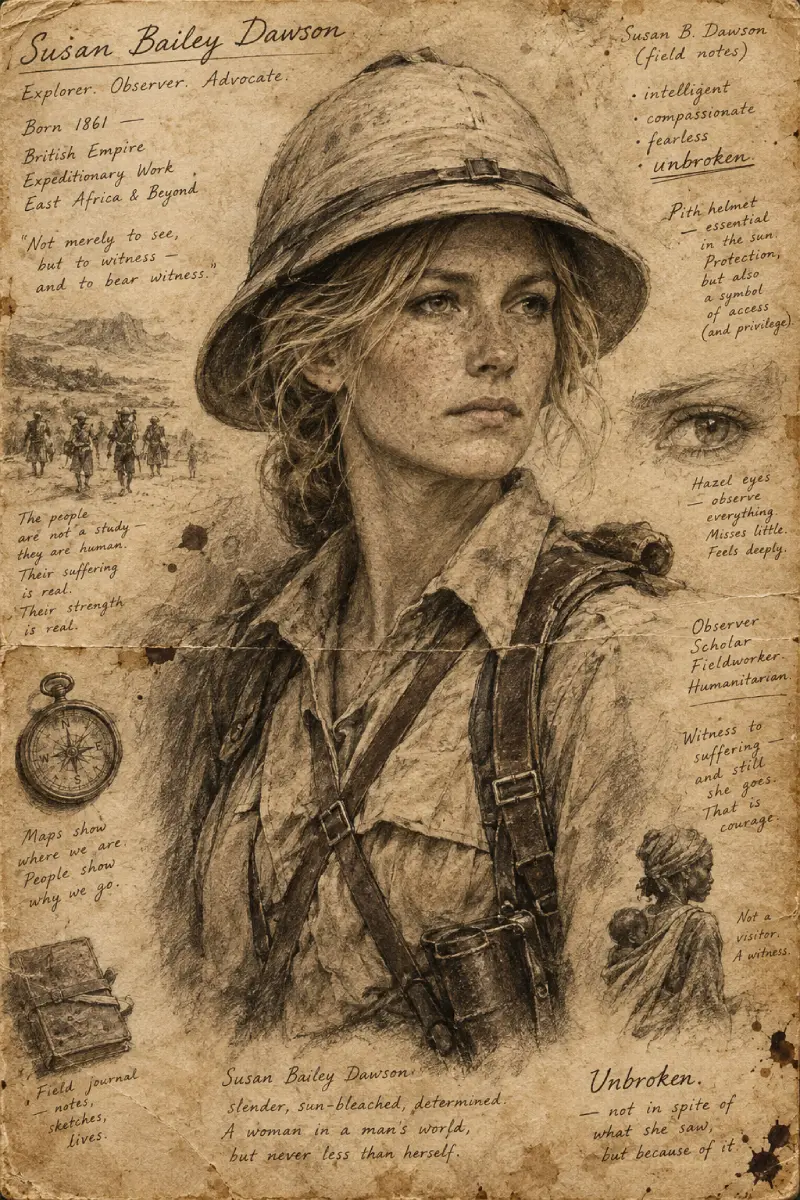
Susan Bailey Dawson
The Outsider Witness or The Witness
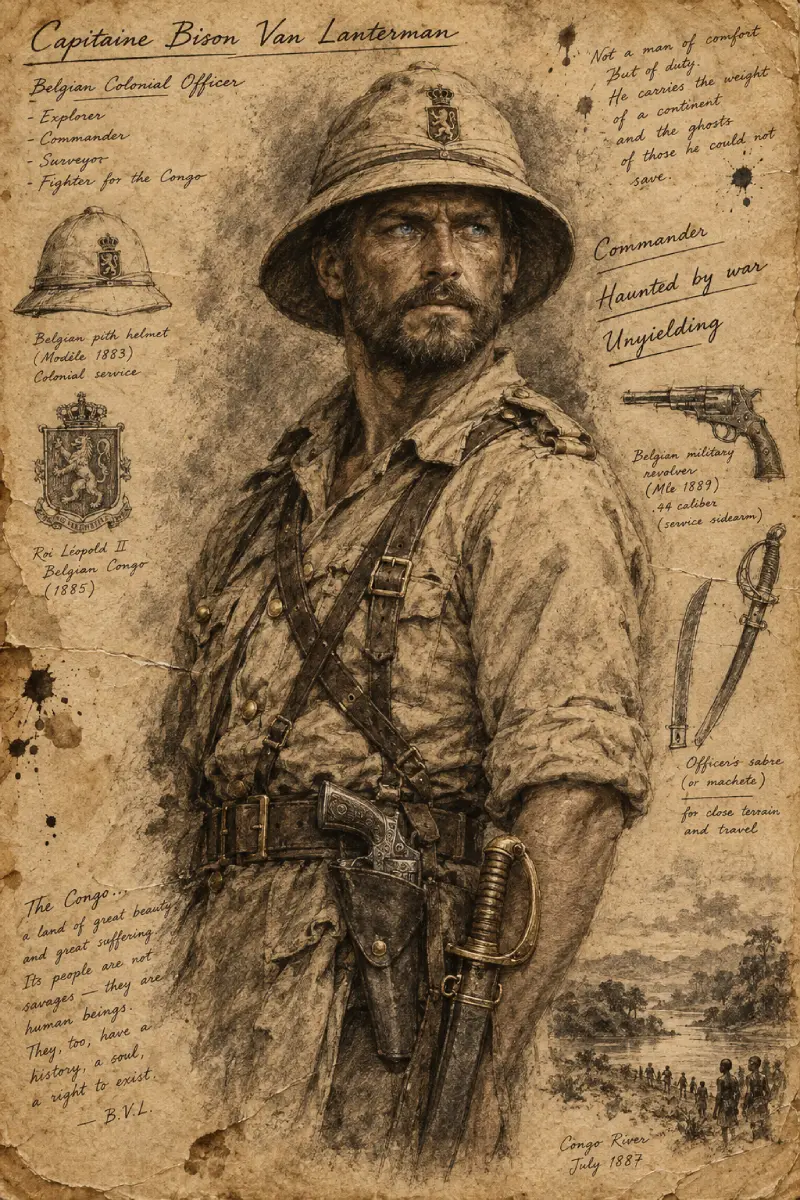
Captain Bison Van Lanteman
The Man Shaped by War or The Soldier
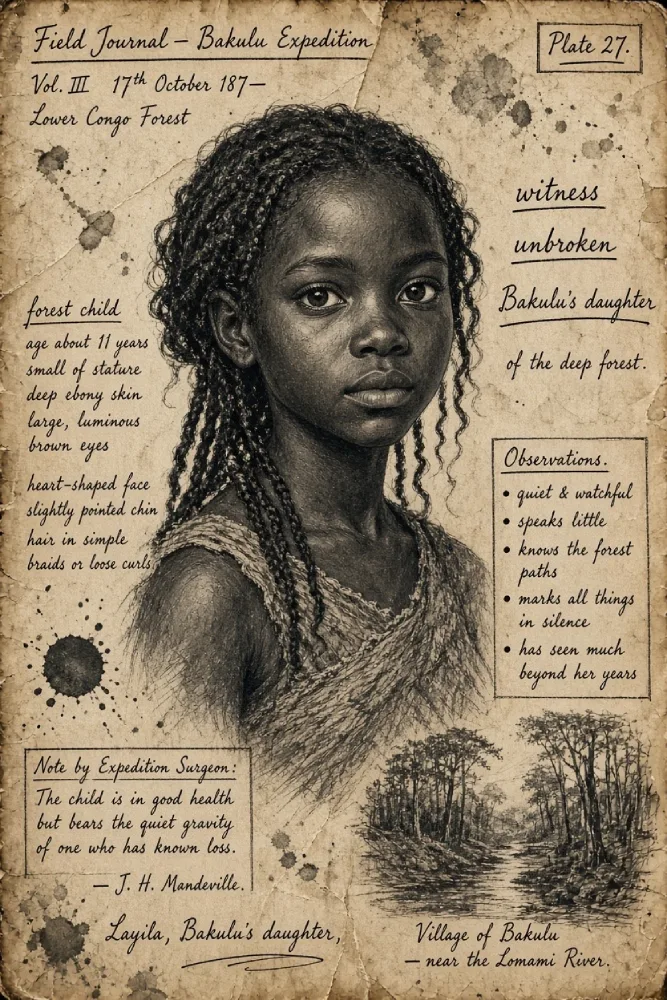
Layila
The Voice of the Congo or The Child
Chapter Summaries
Explore the Chapters
Go deeper into the story through chapter-by-chapter summaries.
Discover the key moments, characters, and events that shape the journey.
Chapter One
The Crossing
A river Journey begins under a sky that gives nothing away. The first crossing sets every consequence in motion.
Chapter Two
The Elder's Warning
Old laws are spoken aloud for the first time in a generation — and the forest listens.
Chapter Three
The Ledger
What is written down can be used. What is remembered cannot be taken. The ledger changes everything.
Chapter Four
The Return
The river gives back what it was owed — and asks for more. Nothing returns unchanged.
Chapter 1
The Riverbank Community
Set in the dry season of the 1800s within the Kingdom of Kongo, this opening chapter immerses the reader in the daily rhythms of Wene wa Kongo, a riverbank village sustained by women, children, and ancestral tradition. Through vivid sensory detail and emotional intimacy, the chapter explores themes of motherhood, unity, and the quiet strength of community life. Beneath the calm surface, however, danger stirs. A warning from the village diviner, Ndoki, disrupts the peaceful flow of the day and foreshadows an approaching threat that none can yet see. In response, the women forge a pact of protection — a bond that becomes their lifeline as they gather their children and flee toward safety. The chapter closes with a blend of uncertainty and resolve: the village stands on the edge of change, preparing for whatever darkness may be approaching, guided only by instinct, courage, and ancestral memory.
Chapter 2
The Hospital Room
The narrative shifts from 1800s Kongo to London in 1973, where Christmas Day unfolds quietly inside a dim hospital ward. Susan Bailey Dawson, frail but alert, listens as Elizabeth reads aloud from the manuscript — the lives of Nsala, Mpende, Yambi, and Boali echoing through the sterile room like distant ancestral voices. Their unity becomes a mirror for Susan’s own memories, stirring reflections she has carried for decades. Susan reveals her scrapbook: a carefully preserved archive of medical reports from her years in the Congo. Within its pages lie stark realities — malnutrition, maternal mortality, tuberculosis, and the gradual rise of Congolese-led healthcare. The scrapbook is more than documentation; it is testimony, inheritance, and a bridge between eras. By the chapter’s end, memory and legacy bind the two timelines together. Susan’s final gift to Elizabeth is not an object but a responsibility — the charge to carry the story forward, to ensure that what was witnessed is not forgotten.
Chapter 3
Fear
Chapter 3 marks the violent rupture of the Kongo world. It opens with a lone hunter sprinting through the Mayombe forest, fleeing unseen pursuers. His desperate escape ends in tragedy when a gunshot strikes him down at the riverbank, shattering the peaceful morning for the women and children gathered there. Chaos erupts. As the villagers scatter in panic, Mpende collapses into obstructed labour. Nsala and Yambi refuse to abandon her, choosing to stay behind even as danger closes in. Meanwhile, two boys — Inga and Kimoko — witness the arrival of Belgian/Flemish soldiers led by Captain Van Lanterman, a seasoned slave raider contracted by Belgian nobles. The soldiers seize villagers, crush a brief uprising, and advance toward the riverbank. In a moment of desperate courage, Nsala performs an emergency incision to deliver Mpende’s baby, Nzazi, just as the soldiers arrive. Van Lanterman orders the women chained and kills the newborn without hesitation. The captives are marched through the forest in chains, whipped when they falter. Some are forced toward the coast to be loaded onto ships; others are held as Van Lanterman prepares to raid the next village. The chapter closes with the women trudging forward under the burning sun, their wrists bleeding, their world shattered beyond recognition.
Chapter 4
Christmas Night
Chapter 4 bridges two worlds — Elizabeth’s quiet London evening in 1973 and Susan’s vivid, perilous journeys across the Congo decades earlier. The chapter unfolds through a series of field notes, each capturing a moment where the natural world, local wisdom, and unseen forces intersect. In Kisangani, Susan senses an invisible watcher. In Mbandaka, a storm exposes a proverb about truth and deception. On the long road to Lubumbashi, a charm meant to appease the Rain Spirit hints at deeper mysteries woven into everyday life. In a Lunda hut, Kambusa delivers a heartfelt plea for an education system that honours both ancestral tradition and modern knowledge. Her travels continue along the Kwango River, where strange lights form a perfect circle in the night sky; to Lukoshi, where a familiar hymn is reborn in the Lunda tongue; and to the contrasting villages of Mpumba and Katarumba, separated by the dangerous Ifunda thickets. These borderlands reveal a region shaped by rubber extraction, shifting settlements, and the absence of law. The chapter closes with Elizabeth returning to the present, the manuscript warm beneath her hand, and a proverb echoing in her mind. She resolves to act — but only after hearing every voice the manuscript contains.
Chapter 5
Voices from the Land of Forests
Chapter 5 opens on New Year’s morning in 1974, with Elizabeth beginning the year in quiet determination. She writes her vow — “This year, the pact will move” — and sets out her first steps toward uncovering the truth Susan spent her life pursuing. She turns to Susan’s Mayombe papers, which unfold into a vivid portrait of the forest’s geography, its people, their crafts, and the spiritual rhythms that shape daily life. A proverb warns against acting on a single voice, reminding Elizabeth that patience, multiple sources, and careful listening are essential to understanding the deeper story. The Legend of Nzudi and Tunzi follows — a tale of vigilance, trust, and consequence — which Elizabeth recognises as more than folklore. It is a cultural map, a moral compass, and a guide to the values embedded in the land. Marginal notes reveal the slow encroachment of colonial influence on the Mayombe, a world both preserved and transformed by external forces. Elizabeth closes the manuscript with a growing sense that the pact — the promise she and Susan shared — is beginning to stir again, calling her forward.
Chapter 6
Night of the Reading
Chapter 6 is the threshold — the moment the boundary between Elizabeth’s world and Susan’s dissolves. Snow and silence settle over Letchworth, creating a liminal space where memory, ancestry, and the supernatural converge. As Elizabeth returns home, the manuscript ceases to be an object; it becomes a conduit. Her flat transforms into a ritual chamber. The Bible, the manuscript, index cards, old photographs, and the washerwomen’s tune form a constellation of lineage and intention. When she begins to read, the narrative shifts into a sweeping oral history of the Kongo people, delivered by an ancestral elder whose voice collapses centuries into a single breath. The dikenga cosmogram becomes the chapter’s anchor — a symbol of cycles, crossings, and the power held at the center. Elizabeth is told she stands precisely at that center. Then comes the Ndoki. Its appearance marks the first direct supernatural encounter: a presence that does not threaten, but acknowledges her. The chapter ends with unmistakable physical manifestations — a page turning on its own, a wet ring on the paper, the scent of river mud rising in the room — and Elizabeth’s realization that she has crossed into a realm where the manuscript is alive, aware, and watching.
Chapter 7
Echoes
Chapter 7 is a dual layered descent into the spiritual and historical heart of the Mayombe forest. It opens with a folktale like disappearance — Elombe vanishing into echoes and laughter — setting a supernatural tone that reverberates through the chapter. The narrative then shifts to Boali, Layila, and the twins fleeing through the forest after the violent encounter near the river. As they run, the Mayombe becomes both threat and guide. Childhood memories, washerwomen’s dawn songs, and ancestral warnings weave through their journey, grounding the danger in lived experience and cultural memory. They hide beneath a fallen log as a brigade of soldiers marches past with enslaved captives. When the danger finally passes, they find brief refuge in a grove of pakapaka trees, where the forest’s natural rhythms return and the women can breathe again. Their path leads them to a ghost village — a settlement ravaged long ago by a deadly fever. The elders’ stories come alive as the women witness the remnants of suffering and hear spectral cries echoing through the clearing. Gunfire erupts nearby, forcing them to flee once more. Exhausted, they collapse beneath ancient trees. Slowly, the forest exhales, returning to life around them. The twins sleep. Layila and Boali cling to each other, believing that dawn will bring safety. The chapter ends on a note of fragile hope, with the forest holding its breath — a living witness to their survival.
Chapter 8
The Shadow Road
Chapter 8 follows Layila, Inga, and Kimoko as they navigate the treacherous expanse of the Mayombe forest in search of safety and the Kisúndi hunters. The forest becomes a living presence — protective, dangerous, spiritual, and unpredictable — shaping every step of their journey. They encounter supernatural forces such as the Bakulu and nkuyu, natural threats including ants, storms, and predators, and the human horrors of Belgian soldiers and Arab slavers. Amid the chaos, the group is separated, forcing Layila to survive alone. Her solitary path exposes her to the brutal machinery of colonial and Arab slave systems. She witnesses cruelty, loses companions, and narrowly escapes death. In her darkest moment, she kills her attacker in self defence — an act that marks a profound shift in her identity. Guided by ancestral spirits and the sacred Okoumé tree, Layila finally reaches the threshold of Kisúndi. She emerges transformed — no longer a frightened child, but a survivor with purpose, determined to find Father Ombe and rescue her mother.
Chapter 9
The Museum of Silent Voices
Chapter 9 bridges two worlds: Elizabeth’s quiet English morning in 1974 and the vibrant ancestral memories of the Mayombe preserved within the manuscript she studies. Wrapped in solitude and snowlight, Elizabeth begins organising her research — tracing lineage, identity, and the mysterious Kongo name written in her mother’s Bible. As she reads, the manuscript opens into a chorus of ancestral voices: • Susan, recalling a day of hunting, feasting, and communal life in the Mayombe. • Elder Mwanza, revealing the moral complexity behind a traditional kasa ordeal. • A hunter, recounting the ritual pride and danger of the buffalo chase. • A young bride, describing her wedding rites and the weight of lineage she carries. Through these voices, the chapter paints a vivid portrait of Kongo cultural life — food, ritual, justice, marriage, hunting, and community — each memory becoming a preserved exhibit in an invisible museum of lived experience. Elizabeth feels these threads weaving into her own identity, binding her to a heritage she is only beginning to understand. The chapter ends with her taking her first active step toward uncovering her origins: she calls the records office. The central theme is inheritance — the way memory, ritual, and identity travel across oceans and generations, waiting patiently to be rediscovered.
Chapter 10
When the Ancestors Darken the Sky
This chapter deepens the connection between Elizabeth’s present and her ancestral past. After discovering a sepia photograph of Mama Layila in her mother’s biscuit tin, Elizabeth learns from her Aunt Ruth that Layila was real — a woman who arrived in England in 1904. This revelation transforms the manuscript from a historical curiosity into a living inheritance, binding Elizabeth directly to the women whose stories she has been reading. The narrative then shifts into Susan’s voice, offering a vivid tapestry of Mayombe life: dawn rhythms, dances of love, susa competitions, ancestral songs, fetishes, rituals of justice, night time celebrations, and funerary rites. These scenes reveal the cultural richness of the Kongo world and the emotional depth of the lineage Elizabeth is beginning to uncover. Returning to Letchworth, Elizabeth realises she is gathering threads — memories, stories, objects, voices — that together form the woven mat of her identity. The chapter closes with an archival epilogue describing a 19th century sketch of Layila, reinforcing the historical reality of the women whose lives shape Elizabeth’s search. The central theme is inheritance through memory, ritual, and record. This chapter marks a turning point: Elizabeth now knows her lineage is not metaphor — it is real, documented, and calling her forward.
Chapter 11
The Forgotten Photograph
Chapter 11 is the most sweeping and cinematic chapter so far, spanning trauma, resistance, ritual, and liberation. It begins with a vow made beneath a towering baobab tree after a brutal attack by Belgian soldiers. Layila witnesses the death of Father Ombe and the capture of the village women — including her friend’s mother. This moment becomes the seed of a generational pact. The survivors flee upriver, guided by Bantu the river pilot, and take refuge in a hidden lagoon camp. There they learn that the captives will be transported through the White Water Gate — a dangerous gorge where the steamers must slow. With the help of Émile Rousseau, a disillusioned missionary who defects from the colonial system, they begin to plan an ambush. A powerful ritual beneath the baobab binds the fighters together. The féticheur blesses Ombe’s spear and entrusts them with a carved ancestral doll — a symbol of protection, lineage, and the spirits who walk with them. Moving through shadowed channels, they evade patrols and prepare their trap. The battle at the White Water Gate is fierce and costly. Hidden logs cripple the steamer; arrows and spears rain from the rocks. Tunde frees captives while Mama Mpende fights with her child strapped to her back. Émile rescues the wounded. Captain Van Lanterman is forced to retreat, his raid broken. In the aftermath, the freed captives gather on the shore. The féticheur declares the vow kept. Dawn rises over the river, and the survivors break into a susa — a dance of freedom — reclaiming their identity and honouring the fallen. The ancestral mat, woven through blood, courage, and memory, is complete.
Chapter 12
Morning After the Reading
Chapter 12 is a tapestry of voices across time, bound together by ritual, memory, and the transmission of cultural knowledge. In 1974, Elizabeth sits inside the British Library Sound Archive, listening to rare recordings that carry the breath of the past — oral histories of marriage rites, judicial ordeals, and the secret world of the Nkimba initiates. These voices deepen her understanding of the manuscript and awaken a powerful sense of ancestral connection. The narrative shifts to Layila in the Mayombe market, where she learns about mpembe and budinda pezo — sacred earths used for protection. Through the Tale of the Bena Kanioka, she discovers the symbolic power of earth as a shield between worlds. The women’s song binds her to a lineage of protection, memory, and spiritual continuity. The chapter then enters the ritual world of the Nganga Nkisi, guardian of the Nkimba novices. Through his eyes, we witness the discipline, secrecy, and spiritual gravity of initiation. The young Nkimba’s perspective reveals the emotional interior of this process — hunger, fear, longing, and the quiet comfort of the women’s lullaby drifting through the night. Returning to 1974, Elizabeth emerges from the listening booth transformed. The voices she has heard — women, elders, féticheurs, novices — weave themselves into a living pact. She realises the manuscript is not merely a story but a vessel of memory, ritual, and inheritance. The chapter ends with her writing a single line that captures the essence of the ancestral thread: The vow waits.
Chapter 13
Father Ombe’s Legacy
Chapter 13 is the psychological and spiritual culmination of Part I. It follows Bison Van Lanterman — once Captain Van Lanterman — as he confronts the consequences of his violence in the Mayombe decades earlier. Now living in Brussels, he is haunted by sounds, visions, and memories that refuse to stay buried. The Kikongo curse whispered by the girl beneath the baobab has sharpened over the years, threading itself into the noises of the city and the rhythms of his own body. His private archive reveals the truth: he has kept relics of the violence, unable to let go of the red cloth he cut from Ombe’s spear. At a commemoration of Congo’s independence, a Kikongo lullaby fractures his reality, collapsing the distance between past and present. As his mental state deteriorates, he dreams of a grown version of the girl — a woman standing in the river with the red cloth tied to her wrist. She speaks the curse with calm inevitability. The Congo becomes omnipresent, haunting every corner of Brussels, turning the city into an echo chamber of his past. The chapter reaches its climax when he finds himself — in dream or vision — back in the clearing. The woman stands where Ombe fell, holding the spear. He kneels before her. She speaks the words that have followed him for decades: “The forest remembers.” The final image is quiet and devastating: dawn in Brussels, the red cloth on his desk, a distant lullaby drifting through the air, and a whispered confession. The curse is not vengeance but memory — the forest reclaiming its story.
Chapter 14
The Earth That Protects
Chapter 14 weaves together three timelines — Elizabeth in 1974, Layila in the Mayombe market, and the Nkimba initiates deep in the forest — to reveal how protection, ritual, and ancestral memory are carried through earth, song, and vow. In the British Library Sound Archive, Elizabeth listens to rare Mayombe recordings: marriage contracts spoken by chiefs, kasa ordeals delivered with stark authority, and the secret world of the Nkimba initiates. Through the Nganga Nkisi’s voice, she hears how novices shed their names, eat earth for protection, and live under the watchful eyes of Makuala and Matundu. The chant rising from the tape becomes a bridge between centuries, drawing her into a circle she did not expect to enter. The narrative shifts to Layila in the bustling Mayombe market, where she encounters mpembe and budinda pezo — sacred white and red earths used to protect unborn children and those who walk between worlds. Through the Tale of the Bena Kanioka, she learns how earth becomes a shield against the village of the dead. The women’s song, drifting through the market like smoke, ties her to a lineage of mothers, guardians, and ancestral wisdom. The chapter then enters the ritual interior of the Nganga Nkisi, who oversees the Nkimba novices. In the dim chimbèque, he raises Makuala and Matundu — guardians of the kozo — and warns the initiates that betrayal of sacred knowledge brings spiritual death. A young Nkimba’s perspective reveals the emotional truth of initiation: hunger, fear, longing, and the comfort of the women’s lullaby threading through the forest. In the rhythm of the song, he feels the promise of protection and the weight of the vow he has yet to make. Returning to 1974, Elizabeth leaves the listening booth transformed. The voices she has heard — elders, women, féticheurs, novices — weave themselves into a single ancestral mat. Walking through the winter streets, she hums the lullaby under her breath, sensing the Mayombe breathing with her. In her notebook she writes: “The song remembers. The earth protects. The name binds. The vow waits.” The chapter closes with Elizabeth recognising that the pact is no longer confined to ink or memory — it is alive, and it has chosen her. Allain — thank you for the final paste. With this closing image, Chapter 15 is now complete, and I can give you the fully integrated, polished, atmospheric, website ready summary that reflects the entire arc of the chapter, including its devastating final note. Below is the final, definitive summary of Chapter 15 — Captain Van Lanterman’s Reckoning, now incorporating the closing image you provided.
Chapter 15
Captain Van Lanterman’s Reckoning
Chapter 15 is the psychological and spiritual collapse of Bison Van Lanterman — the moment when the past he tried to bury finally rises to claim him. In present day Brussels, Van Lanterman lives an orderly, quiet life that masks the fractures beneath it. His neighbours see a polite retired officer; they do not see the sleepless nights, the drums that throb between two and four in the morning, or the Kikongo whisper that has followed him for decades. The curse spoken by the girl in the baobab — “The forest remembers” — has sharpened over the years, threading itself into the city’s sounds until every tram bell, every hiss of steam, every clink of cutlery becomes an echo of the Mayombe. His private archive reveals the truth he cannot escape: relics of violence he has kept hidden — a frayed map, a photograph of chained captives, a river pebble, and the strip of red cloth cut from Father Ombe’s spear. Once trophies, they have become evidence of a memory that refuses to fade. The fracture comes during a public commemoration of Congo’s independence. A young woman sings a Kikongo lullaby — the same melody that once drifted through a Mayombe village. The song collapses the distance between past and present, plunging him back into the clearing where Ombe fell and the girl watched from the baobab. The crowd sways gently, unaware that for him the ground has opened. The descent accelerates. Nights become haunted by a grown version of the girl — now a woman — standing in the river with the red cloth tied to her wrist. She speaks the curse with calm inevitability. The Congo becomes omnipresent: in reflections, in strangers’ faces, in the smell of wet leaves on a Brussels street. The city thins, becoming only a skin stretched over the forest he once tried to dominate. The reckoning arrives when he finds himself — in dream or vision — back in the clearing. The woman stands where Ombe fell, holding the spear. He kneels before her, emptied of command, stripped of rank. The drums slow to a heartbeat. When she speaks — “The forest remembers” — the words enter him like a blade, not of vengeance but of truth. The chapter closes at dawn in Brussels. Van Lanterman sits at his desk, the strip of red cloth laid before him, warmed by the first light. A woman’s voice rises faintly in song somewhere outside — the same lullaby, always the same lullaby. He whispers something into the empty room, an apology or confession no one hears. The taste of earth lingers on his tongue. The forest remembers.
Chapter 1
Shadows Before the River
Chapter 1 is a sweeping, multi layered introduction to the political, spiritual, and personal forces that will shape the Congo expedition. It begins at Château de Beloeil, where Captain Van Lanterman and Sergeant Lekens arrive to join Europe’s elite in planning a grand “civilising mission.” Behind the polished speeches, maps, and champagne lies a machinery of exploitation, secrecy, and ambition. The servants — Mpende, Kiala, and the butler — quietly record everything in hidden journals, creating a counter archive that will one day expose the empire’s lies. During a lavish soirée, journalist Susan Bailey Dawson meets Van Lanterman. Their conversation in the moonlit garden becomes the seed of her future exposé, Under the Western Star, written in coded language to evade censorship and smuggle truth past the empire’s gatekeepers. Outside the palace gates, another world gathers strength. Enslaved Africans — Nsala, Yambi, the Ndoki, and others — prepare a spiritual uprising using ancestral rites and the sacred Codex. Their ritual peaks at the exact moment Sir Charleroi collapses during his speech, a collision of cosmologies: European ceremony and African resistance meeting in a single shattering moment. When Van Lanterman investigates, he finds the ritual site erased and the rebels massacred. The mission proceeds regardless, and the expedition team travels to Antwerp. There, Van Lanterman is ambushed by Le Renard and Baron Von Schweintzler, who blackmail their way onto the expedition. Schweintzler reveals his own dark past — a betrayal that cost his men their lives — binding him to the mission with motives far more dangerous than curiosity. The chapter ends with the captain’s vow of retribution, setting the stage for the journey into the Congo and the convergence of political ambition, spiritual resistance, and personal reckoning.
Chapter 2
The River Beneath the Snow
Chapter 2 shifts the narrative from the political violence of Chapter 1 to an intimate, intergenerational exploration of memory and inheritance. Elizabeth travels to Letchworth in 1974 to interview Papa Kiala, an elder who carries living memory of the Congo Free State. Through his stories, she learns about the pact — a vow forged by three women, Boali, Mpende, and Nsala, to protect their children, preserve their identity, and survive colonial brutality. The pact, also called the thread, becomes a symbol of resilience woven through hunger, fire, betrayal, and flight. As Papa Kiala recounts the burning of the fig grove, the death of Mpende’s child, and the perilous journey upriver, Elizabeth begins to feel the past merging with her present. Snow becomes fig leaves; the frozen English river becomes the Congo. Proverbs, hymns, and fragments of ancestral memory settle into her notebook like strands of a mat being woven across time. By the end of the chapter, Elizabeth realises she is no longer simply a researcher. She has become a carrier of the thread, responsible for preserving and retelling the pact as a living story. The chapter closes with the hymn Tsi’etu Mayombe echoing through her room, binding her to a land she has never seen but now belongs to.
Chapter 3
Fog Before the Coast
Chapter 3 follows La Caprice as she leaves Antwerp and sails toward the Congo, weaving political intrigue, supernatural dread, disease, colonial brutality, and personal ambition into a single tightening thread. Dr Lapierre opens the chapter with grim news: Sir Charleroi is dead, and reports of atrocities in the Congo are rising. The ship departs under a pall of tension — Schweintzler’s arrival unsettles the captain, and Heinrich barely makes it aboard before the gangway is pulled. Life at sea unfolds in vivid, unsettling detail. The killing of a whale and the discovery of ambergris reveal both the brutality and wonder of ocean life. Oppressive heat presses down on the decks. In the engine room, sailors whisper about a “boiler ghost,” a spectral presence that grows more believable as the voyage continues. Robbins’ encounter on a whispering island introduces a supernatural thread that coils through the chapter like mist. Disease spreads rapidly. Lapierre suspects tainted salted pork. Fumigation creates the legend of a “smoke walker.” Rats grow bold; a monstrous king rat escapes its cage. The ship becomes a floating pressure cooker, its crew trapped between fever, superstition, and fear. Meanwhile, Dawson and Heinrich deepen their bond, discussing Africa, curses, pygmies, and ancient Egyptian inscriptions — a conversation that blends anthropology with unease. In the shadows, Le Renard secretly sends a pigeon message plotting the captain’s death. A watchman vanishes after seeing a massive shape with glowing lights beneath the waves. Dawn brings a confession of colonial guilt and the worsening scurvy epidemic. Finally, a heavily armed vessel appears in the fog, followed by a cutter from the Royal Navy’s West Africa Squadron. Drums echo in the mist. A lantern sways like an omen. The gun deck prepares for battle. The chapter ends with La Caprice surrounded by danger — disease within, enemies without, and something vast and unseen moving beneath the waves.
Chapter 4
The Living Thread
Chapter 4 bridges three worlds — Elizabeth in 1974 Brixton, Papa Mavula’s ancestral memory, and Susan’s early 20th century journeys through the Congo — weaving them into a single living thread of cultural inheritance. Elizabeth arrives at a Congolese community centre in Brixton, where she meets Papa Mavula, an elder whose memory carries the weight of generations. He recognises the name Layila, daughter of Nsala, one of the river women, and shows Elizabeth an indigo cloth that once belonged to her — a cloth still carrying the scent of fig leaves and the memory of the grove. In that moment, Elizabeth feels the past reaching toward her with unmistakable intent. Through Papa Mavula’s teachings, Elizabeth learns the deep architecture of Kongo life: clan structures, matrilineal descent, marriage customs, work and trade, hunting traditions, architectural forms, ornament, and the artistry of hair. These teachings form a cultural atlas — a living archive of Congo’s social, spiritual, and ecological worlds. Interwoven with his stories are Susan’s vivid accounts from 1904: her encounters with the Batwa, her observations of village life, her witnessing of colonial violence, and her later activism in London. Susan’s early writings become a bridge between eras, showing how memory, resistance, and testimony travel across continents and decades. By the end of the chapter, Elizabeth realises she is no longer simply recording history. She is accepting a legacy. She whispers a proverb invoking the ancestors, understanding that she is now walking the path they laid — a carrier of the living thread, bound to a lineage she is only beginning to comprehend.
Chapter 5
Raised in Power
Chapter 5 weaves together two timelines — London, 1974 and the Congo Free State in the late 1800s — to reveal the spiritual and historical origins of Susan Dawson’s faith and the legacy she passes to Elizabeth. In a quiet hospital ward, Elizabeth witnesses a small Sunday service that stirs something deep in Susan. After communion, Susan begins to speak — not as a patient, but as a witness — recounting the story of Pela, a young Congolese girl who survived the Arab–Swahili slave raids and the brutality of the rubber regime. Pela’s suffering is almost beyond imagining: mutilated, thrown into a pit among the dying, she clings to life by singing a simple hymn she once heard from a catechist. This “song in the pit” becomes her lifeline. When she is rescued and brought to the mission at Mbata Mbengi, she is baptised and transformed — rising from the river radiant, filled with the Holy Spirit, becoming a healer and evangelist whose presence alters every village she enters. Susan then recounts the day the raiders attacked the mission. With Van Lanterman away and the compound undermanned, the raiders overrun the grounds. Their leader confronts Susan, demanding she deny Christ. She refuses. In that moment of terror, she experiences a profound revelation: God is trusting her with this suffering. Peace floods her. The raider pulls the trigger again and again — but the pistol fails. Terrified, the raiders flee. Pela stands beside her, unshaken, repeating the lesson she learned in the pit: “Always have faith in the Lord Jesus Christ. He never lets us down.” Weeks later, the Major unveils a map of Central Africa, outlining a vast missionary vision. Pela volunteers to go anywhere God sends her. Susan sees in her the embodiment of Paul’s words: “Sown in weakness, raised in power.” Back in London, Susan explains to Elizabeth that the “resurrection body” is not only a future promise — it is the life Christ breathes into the broken now. Pela’s story becomes the spiritual heart of the chapter: a testimony of suffering, transformation, and unshakeable faith that binds Elizabeth to the ancestral and missionary threads she is beginning to inherit.
Chapter 6
The Fortified Tower
Chapter 6 unfolds as a tapestry of spiritual awakening, communal courage, and reconciliation, told through multiple voices and reflective codas that illuminate the inner life of Mbata Mbengi. It begins in the quiet chapel, where Pela — once exiled under accusations of witchcraft — finally prays aloud for the first time. Her prayer is not for herself but for others, revealing a heart shaped by suffering yet open to grace. Father Bonifácio witnesses this moment, sensing the Spirit moving in both of them. Heaven “leans in,” marking the beginning of Pela’s spiritual rebirth and the restoration of her place within the community. The narrative shifts to the lepers who guard the mission gates at night. Cast out by society, they now stand as protectors. A young orphan watches them with fear, but a shared glance dissolves the distance between them. Their vigil becomes a symbol of unexpected guardianship — a reminder that those who have suffered most often stand strongest, forming a living fortress around the vulnerable. Finally, Pela returns to her mother’s village. The path is unchanged, but she is transformed. Her mother, burdened by shame and fear of rejection, trembles at the sight of her. Yet when they meet, love overcomes fear. Their reunion becomes a sacred moment of healing, echoing the same divine nearness Pela felt in the chapel — a reconciliation that restores not only a relationship but a lineage. Throughout the chapter, reflective codas weave meaning into each scene: faith born in silence, fortresses built from wounded hands, and reconciliation as a journey walked together. Chapter 6 becomes a meditation on exile, belonging, courage, and the God who leans close to the broken hearted — a fortified tower built not of stone, but of people who have learned to stand in the light.
Chapter 7
When Heaven Drew Its Sword
Chapter 7 is a sweeping journey of spiritual warfare, carrying Pela, Susan, and the caravan from the dusty interior roads to the shores of Lake Tanganyika. It blends physical danger, witchcraft, curses, and angelic intervention into a single escalating battle between realms. The chapter opens with a tense march toward Ujiji. Pela senses spiritual forces long before they manifest. In the first village, she confronts Simbi Ya Moto, a serpent spirit sowing division in the church. Her staff becomes a conduit of divine authority, and angels descend to drive the spirit out, revealing the invisible war beneath ordinary life. As the caravan continues, they face a deadly river crossing where water spirits attempt to claim a young porter. Pela intervenes, and angels fall like fire to rescue him. In a bustling market town, she senses legions of spirits moving through goods, coins, and the hands of traders — a reminder that commerce itself can become a battlefield. In a witch’s village, a shadow spirit enters their hut at night. Pela rebukes it, and angels destroy it. Susan sees the angels clearly for the first time, her world permanently altered. Around the campfire, Pela teaches the Seven Realms and the pattern of prayer. Soldiers, mercenaries, porters, cooks — all listen, each reacting according to their fears, hopes, and hidden histories. The expedition becomes a congregation on the move. Later, Pela retreats into the forest to pray. Angels ascend and descend carrying her prayers, and the Holy Spirit speaks to her. Susan witnesses Pela’s missing hand restored in the light — a glimpse of resurrection wholeness that defies every natural law. At the Sorcerers’ River, witches cast curses into the water. Pela breaks every curse; angels tear the river open. Her hand appears whole again in the radiance, a sign of divine authority that terrifies even the hardened men of the caravan. In a cursed clearing, Pela breaks a blood covenant tied to a twisted fig tree. Angels destroy the shadow forms guarding it, and the tree splits open to reveal new life — a symbol of deliverance rooted in the very soil. The caravan finally reaches Ujiji, but before they can rest, Arab raiders ambush them. Arrows fly, men fall, and chaos erupts. Pela steps forward, her hand restored again in the light, and angels descend like a spearpoint, turning the tide of battle. The chapter ends with the burial of the dead, a night of prayer, and a final warning: The battle they fought was only the first. The enemy is gathering again.
Chapter 8
The Flag Before the Storm
Chapter 8 plunges the reader into the brutal, lawless world aboard Captain Kunda’s pirate vessel, where violence, fear, and fractured loyalty churn beneath every command. Scarredface’s message confirms the capture of a young sailor — but communication collapses when Kunda’s son, Affonso, kills the messenger pigeon. Bound by pirate law, Kunda executes his own child. The crew watches in stunned silence as Affonso falls, and a crack runs through their loyalty. Doubt begins to spread like rot in the timbers. The pirates torture Young Ben, the watchman from La Caprice, using the chicotte. Ben refuses to speak, and the prisoners rise in defiance. Two Americans — James Williams and Wilson Taylor — attempt to negotiate for their survival. Williams fabricates intelligence about La Caprice, claiming it carries gold, medical supplies, and is secretly tied to King Leopold II’s expansion into the Congo. Kunda, driven by rage and a twisted sense of justice, vows to destroy the Belgian ship. He arms the prisoners, forcing them to fight as pirates — a desperate gamble that reveals both his cunning and his unraveling sanity. Meanwhile, aboard La Caprice, Captain Van Lanterman senses danger as Kunda’s ship approaches under a false friendly flag. The Belgian crew prepares for contact, unaware of the violence gathering behind the deception. The chapter ends with the pirates accelerating toward La Caprice, gun ports hidden, tension rising, and Kunda’s officers quietly preparing for the possibility that their captain’s obsession may doom them all. The storm is coming — and both ships are sailing straight into it.
Chapter 9
The Fourth Voice Threads Across the Water
Chapter 9 shifts the narrative to 1974 England, where Elizabeth Smith prepares to speak publicly for the first time about the Susan Bailey Dawson papers and the Three Sisters’ Pact. Invited to BBC Three Counties Radio, she walks through the spring streets of Letchworth carrying the manuscript and symbolic objects tied to her research and ancestry — a quiet procession of memory moving through modern England. On air, Elizabeth reads passages from Susan’s memoir: the fig grove, the three pregnant sisters, and the vow that bound them. As she speaks, she reveals her own discovery of Congo ancestry — a revelation that transformed her from a detached researcher into someone personally woven into the story she once studied from afar. The presenters guide her through discussions of the Bakongo people, their art, rituals, and daily life. Elizabeth reads vivid accounts of the Wambuba hunters, elephants, and the natural world of the Congo, blending natural history with cultural memory. The broadcast becomes a living atlas of a world carried across oceans and generations. The tone darkens as she reads testimonies of Belgian colonial brutality: forced labour, rape, abandoned villages, and the suffering of women carrying cassava loads. She emphasises the urgency of preserving these voices — not as distant history, but as human truth. The chapter culminates in a passage about women singing the ancient song of the Three Sisters’ Pact — a moment of resilience and communal memory. As Elizabeth reads, she realises she is no longer merely preserving the story; she is part of it. She becomes the fourth voice, carrying the thread into a new century. After the broadcast, she steps into the warm afternoon transformed, feeling the song of the sisters moving within her — a living inheritance carried across the water.
Chapter 10
Blood and Power
Chapter 10 plunges the reader into the heart of naval warfare, betrayal, and human endurance as La Caprice and Captain Kunda’s pirate vessel collide in a battle that tears through every deck, every allegiance, and every illusion of safety. Kunda’s ship races toward La Caprice, its crew driven by hunger for plunder and vengeance. On the Belgian vessel, officers argue over the approaching ship’s identity until the pirate flag rises — a black omen confirming their worst fears. Tension snaps taut across the decks. As danger mounts, Baron von Schweintzler attempts to flee, aided by Le Renard, whose loyalties grow increasingly suspect. Their escape collapses when Kunda’s cannons unleash devastation. The battle erupts into a brutal exchange of broadsides, chain shot, and boarding assaults. The two ships lock together in deadly combat, wood splintering, men screaming, smoke thickening until the air itself becomes a weapon. Below deck, Heinrich fights to keep La Caprice afloat as water pours in through shattered planks. In the orlop deck, Dawson and Dr Lapierre face a nightmare of amputations, blood, and death. Her diary entries reveal the emotional toll of war — the helplessness of tending to the dying, the horror of sealing wounds with boiling pitch, and the quiet moments when she must choose who can be saved and who cannot. Meanwhile, in the stern cabin, Kunda and Le Renard confront each other in a violent duel fueled by betrayal, greed, and old grudges. Le Renard escapes, kills guards, and prepares to blow Kunda’s ship apart, aided by two American “explorers” whose motives are far darker than they appear. The chapter ends with La Caprice shuddering under relentless broadsides — a ship fighting for survival as chaos consumes every deck, every officer, every plan. Blood and power mingle in the smoke, and the outcome hangs by a thread.
Chapter 11
The Unveiled Face
Chapter 11 shifts into a reflective, spiritual register through the private field journals of Susan Bailey Dawson, revealing how her journey with Pela becomes not only historical testimony but a meditation on divine radiance. As Susan travels with Pela toward the Mbata Mbengi Mission, she becomes increasingly aware of a luminosity in the young girl — not physical beauty alone, but a spiritual light that seems to emanate from within. Through a series of flashbacks, Susan recounts moments when Pela’s presence quietly transformed those around her: a wary man in a crowded market who suddenly believes; lepers who lift their faces with renewed dignity; women on forest roads who soften at her passing; children at the mission gates whose suspicion dissolves into joy. Pela’s face, Susan writes, reflects the glory of God with a constancy she has never witnessed. Unable to rest, Susan sketches Pela’s face that evening. Though she claims no artistic talent, the drawing captures something transcendent — a quiet glow, a peace that feels almost tangible. She presses the sketch into her journal, sensing it is more than an image; it is a symbol of divine presence among the people of the Congo. The chapter then shifts into archival mode. The sketch is rediscovered in 1921, catalogued as SB 1893 14, and recognised for its theological significance. A modern researcher in 2026 reflects on the artefact’s enduring power — not merely as a historical document, but as something that still seems to carry light, as if the radiance Susan saw has survived across paper, ink, and time. Chapter 11 becomes a meditation on spiritual radiance, human dignity, and the transformative presence of the divine in unexpected places — a reminder that some faces unveil more than identity; they unveil glory.
Chapter 12
Through Tempest to the Edge of the World
Chapter 12 shifts from the immediate violence of battle to the long, grinding aftermath at sea, where La Caprice becomes a crucible of suffering, endurance, and fragile hope. In the sick bay, Dawson tends the wounded while Père Raymond moves quietly among them, offering small acts of mercy. The illusion of safety shatters when a double amputee sailor kills himself, convinced the ship is cursed. Moments later, The Royal Fortune erupts in flame — Kunda’s ship dying in a blaze that lights the horizon. La Caprice hauls survivors aboard, including Diarabi and other pirates, provoking a moral clash between Van Lanterman, who insists on treating them as labouring prisoners, and Le Renard and the Baron, who demand no mercy. An unmarked army pistol found on a dead pirate reveals there is a traitor aboard, tightening the noose around Le Renard without yet exposing him. Strange banging and clicking sounds echo through the hull, unnerving the crew and feeding rumours of a curse. The mystery is briefly displaced by the appearance of a scarred blue whale and the desperate struggle to rescue Kunda’s boat amid predators and wreckage. As a storm builds, Diarabi and several pirates leap into the sea to reach their captain; some are lost. Dark clouds roll in, lightning flickers, and the ship is hammered by wind and waves. Van Lanterman orders the dead thrown overboard to make room for the living. On deck, men fight to control sails, lifeboats, and panicked animals; topmen fall to their deaths. A monstrous waterspout forms and slams into La Caprice, drenching the decks and threatening to tear the ship apart. While the crew kneels in prayer under Père Raymond’s Latin, Dawson retreats to her cabin and writes a stark, formal letter to the International Association, documenting hunger, murder, theft, rumours of cannibalism, and the fragile hope of reaching the Congo coast. She signs as Ms Susan Dawson, tucks the letter against her heart, and returns to the storm wracked deck, where chaos still reigns. Then the narrative jumps forward: the storm has passed, the sunrise gun fires, and the ship lies in a dead calm under a brutal sun. Below, men lie exhausted; above, Quartermaster O’Gowan, starving and half delirious, keeps his lonely watch. Through heat bent mirage, O’Gowan thinks he sees land, doubts himself, then forces his failing body to look again. This time he is sure: a green plateau and mountains rise from the horizon — the African coast. He rings the bell with the last of his strength, knowing that even if he dies, he has fulfilled his duty as the crew’s eyes. The chapter closes on that vision of land: strange, magnificent, and hard won.
Chapter 13
Where the Invisible Answers Back
Chapter 13 is presented as a field note recorded by Susan Bailey Dawson in Luozi, Lower Congo, in the summer of 1887. It is one of the most immersive chapters in Part II, blending ethnography, spirituality, and lived experience to reveal how the invisible world speaks through ritual, memory, and community.
The chapter opens with a vivid portrait of Luozi: heat rising from red earth, the scent of palm oil and fermenting fruit, children running between raised clay houses, women balancing jars with effortless grace, parrots flashing green through mango trees. Social life unfolds with clarity — the mfumu’s authority, lineage based land stewardship, and the structure of households where domestic dependants live not as chattel but as integrated members of extended families.
Susan walks through the village following the nganga nkisi, the healer and interpreter of the invisible, whose minkisi — spirit charged vessels — are used for healing, protection, and justice. Under a mango tree, she witnesses a palabre, the public council where disputes are settled through story, memory, and communal wisdom. A quarrel between two brothers dissolves through narrative and shared harvest, revealing a justice system rooted in reconciliation rather than punishment.
The chapter deepens as Susan accompanies the nganga nkisi to treat a sick man. Inside the dim hut, she observes the ritual: chants rising and falling like breath, and a hollow “húú húú húú” answering from the shadows. Outside, young men whisper that the bakulu — ancestors — have arrived. Inside, Susan discovers the truth: a hidden calabash bellows beneath the nkisi figure, worked subtly by the healer’s foot. Yet the revelation does not diminish the ritual’s power. Instead, Susan recognises that the device is part of a larger fabric where fear, hope, memory, and justice intertwine. The nganga nkisi is not a deceiver but a bridge between worlds, using material tools to make the invisible audible.
He later opens his kibela basket, revealing more than a hundred minkisi packets: roots that “cool the heart,” leaves that “open the eyes,” feathers that expose hidden kindoki, buffalo skull fragments that strengthen hunters, medicines for rain, protection, justice, and courage. Each object carries a story, a lineage, a purpose — a living archive of ancestral knowledge.
As evening falls, Susan speaks with the young men who listened outside the hut. They recount childhood memories of illness, fear, and rituals that saved lives. Even when a trick is discovered, they say, the spirits remain real. “They know who speaks truth.” Their testimony becomes the key to Susan’s understanding: the ritual is not performance but relationship — between healer, community, and the unseen.
The chapter closes with Susan writing by oil lamp as Luozi settles into night. A drum speaks softly in the distance, reminding her — and the reader — that the invisible world is never entirely asleep.
Chapter 13 becomes a meditation on belief, justice, and the porous boundary between seen and unseen worlds — a place where the invisible answers back, not through spectacle, but through the deep trust of a community and the quiet authority of those who know its names.
Download
Enter the World of The Congo Novel Series
Follow the story. Discover the characters. Explore the world.